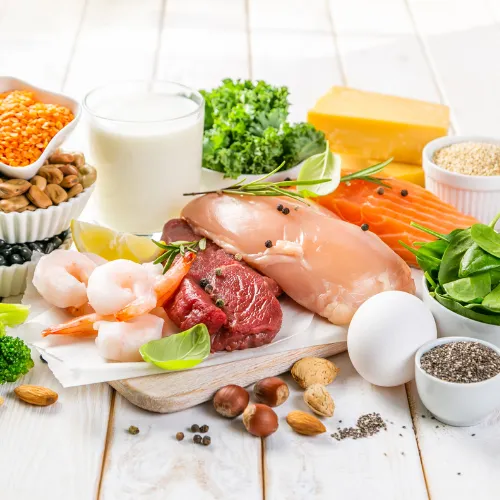
Complete vs Incomplete Proteins
Proteins are often described as either complete or incomplete depending on their amino acid composition. This distinction helps explain why protein sources are commonly compared within everyday nutrition and why different foods may be combined across meals and routines.
Within the broader category of amino acids and protein-based supplements, complete and incomplete proteins are best understood as a way of organizing how foods provide essential amino acids rather than as a strict measure of whether a food is "good" or "bad."
What complete proteins are
Complete proteins contain all essential amino acids in substantial amounts. Essential amino acids are the amino acids the body must obtain through food because they cannot be produced internally in sufficient quantities.
Animal-based foods such as eggs, dairy products, fish, poultry, and meat are commonly described as complete protein sources. Some plant foods, such as soy and quinoa, are also often categorized as complete proteins.
This classification helps explain why certain foods are frequently discussed as reliable protein sources within everyday nutrition.
What incomplete proteins are
Incomplete proteins are foods that contain protein but do not provide all essential amino acids in substantial proportions on their own.
Many legumes, grains, nuts, seeds, and vegetables fall into this category. This does not mean these foods lack nutritional value or cannot contribute meaningfully to overall protein intake. Instead, it reflects differences in amino acid distribution across foods.
In practice, many incomplete protein foods are consumed alongside other foods throughout the day as part of broader dietary patterns.
Why this distinction became important
The distinction between complete and incomplete proteins became more widely discussed as nutrition science began focusing more closely on amino acid composition and how proteins contribute to overall dietary patterns.
It also became especially relevant in discussions involving vegetarian and plant-based eating styles, where protein variety and food combinations are often emphasized more intentionally.
Today, the complete-versus-incomplete distinction is commonly used to help explain how different protein sources contribute to overall amino acid intake.
How protein variety works in everyday eating
In everyday life, most people consume proteins through mixed meals and varied dietary patterns rather than through isolated foods alone. Legumes, grains, dairy products, meats, seeds, nuts, and vegetables are often combined naturally across meals and snacks.
Because of this, amino acid intake is usually shaped by overall dietary variety across the day rather than by any single food in isolation.
This broader perspective helps explain why protein discussions are often centered around meal structure and long-term eating habits rather than around individual ingredients alone.
For more on how protein intake is commonly interpreted across meals and routines, see How Protein Intake Fits Into Daily Routines.
How plant-based proteins are commonly discussed
Plant-based proteins are often discussed differently because many individual plant foods provide different amino acid distributions compared to animal-based proteins.
As a result, plant-based eating patterns frequently emphasize protein variety and combinations of foods over time. Legumes and grains are common examples, as they provide complementary amino acid profiles when included in broader dietary patterns.
Modern plant-based protein powders and blended formulations are also often designed to combine several plant sources.
For more on how plant-based and animal-based protein products are commonly compared, see Plant-Based vs Animal-Based Protein Powders.
How amino acids fit into the discussion
The complete-versus-incomplete distinction is ultimately based on amino acid composition. Proteins are built from amino acids, and the balance of those amino acids influences how protein sources are categorized.
This relationship helps explain why amino acid discussions and protein discussions are so closely connected within nutrition.
For more on the foundational role of amino acids, see What Amino Acids Are and How They Are Commonly Understood.
Why protein categories can feel confusing
Protein discussions can sometimes feel overly technical because foods are often compared using scientific terminology that is not always obvious in everyday eating patterns.
At the same time, modern protein products frequently emphasize source, amino acid content, or protein quality in marketing language, which can make the category feel more complicated than it is in practice.
In reality, complete and incomplete proteins are simply ways of describing how foods contribute essential amino acids within broader dietary patterns.
How this relates to protein powders and supplements
The distinction between complete and incomplete proteins also appears throughout protein powders and meal-support products. Whey and casein proteins are commonly described as complete proteins, while plant-based powders may combine multiple plant sources to create broader amino acid profiles.
This is one reason blended plant proteins became increasingly common within supplement products.
For more on how protein powders fit into everyday nutrition routines, see Understanding Protein Powders in Everyday Nutrition.
Food patterns and long-term consistency
Complete and incomplete proteins are most useful to understand within the broader context of long-term dietary structure rather than through isolated meals alone. Most people consume proteins through varied eating patterns that naturally combine multiple food sources over time.
This broader perspective helps keep protein discussions grounded in everyday nutrition rather than turning protein quality into a rigid or isolated concept.
Bringing it together
Complete and incomplete proteins are categories used to describe how foods provide essential amino acids. Complete proteins contain all essential amino acids in substantial amounts, while incomplete proteins provide different amino acid distributions depending on the source.
In everyday nutrition, these distinctions are usually shaped by wider dietary variety and meal structure rather than by isolated foods alone.
Understanding complete and incomplete proteins helps clarify how amino acids, protein sources, and overall eating patterns fit together within daily nutrition routines.

 Session Expired from Inactivity