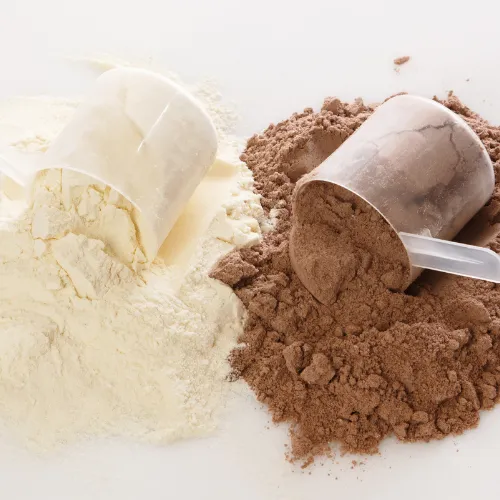
Plant-Based vs Animal-Based Protein Powders
Protein powders are commonly grouped according to their source, with most products falling into either plant-based or animal-based categories. This distinction helps explain why protein powders can differ in texture, ingredient composition, amino acid profile, and how they fit into everyday eating patterns.
Within the broader category of amino acids and protein-based supplements, plant-based and animal-based protein powders are best understood as different approaches to providing dietary protein rather than as completely separate nutritional systems.
What animal-based protein powders are
Animal-based protein powders are derived from dairy, eggs, or other animal-derived foods. Whey and casein are the most common examples and are both produced from milk.
Whey protein is often associated with faster mixing and lighter textures, while casein is commonly discussed in relation to thicker textures and slower digestion patterns. Egg-based protein powders are also available, though they are less common.
Because animal-derived proteins naturally contain all essential amino acids in substantial amounts, they are frequently described as complete protein sources.
What plant-based protein powders are
Plant-based protein powders are derived from legumes, grains, seeds, or blended plant sources. Common examples include pea protein, rice protein, soy protein, hemp protein, pumpkin seed protein, and mixed plant-protein blends.
Some plant proteins naturally contain different amino acid distributions compared to animal proteins, which is why many products combine several plant sources within one formula.
Plant-based powders are often selected for dietary, lifestyle, or preference-based reasons rather than because they represent a completely separate category of nutrition.
Why protein source became a major discussion point
As protein powders became more integrated into everyday routines, people increasingly began comparing products based on food origin, ingredient preference, digestion, dietary style, and sustainability concerns.
This led to more visible discussions around dairy-based versus plant-based approaches to protein intake.
At the same time, the expansion of vegetarian, vegan, and flexitarian eating patterns contributed to the rapid growth of plant-based protein products across both supplement and food categories.
These broader eating patterns are often grouped into named dietary categories, though in everyday life they are usually more flexible and variable than strict labels suggest. For a broader look at how different eating styles are commonly defined and interpreted, see Diet Types Explained.
How amino acid profiles differ
One of the most common differences discussed between plant-based and animal-based proteins involves amino acid composition.
Animal-derived proteins are often categorized as complete proteins because they naturally contain all essential amino acids in substantial amounts. Some plant proteins provide different amino acid proportions depending on the source.
This is one reason blended plant proteins became increasingly common. Combining sources such as pea and rice protein can create broader amino acid coverage across the product.
For more on how complete and incomplete proteins are commonly understood, see Complete vs Incomplete Proteins.
How plant-based and animal-based powders fit into routines
In everyday life, both plant-based and animal-based protein powders are commonly used for similar practical reasons. They may be included to help support consistency during busy schedules, travel, exercise routines, meal gaps, or periods when preparing protein-rich meals is less convenient.
The difference is often shaped more by dietary preference, ingredient choice, digestion patterns, or food philosophy than by entirely different uses.
This overlap helps explain why both categories appear throughout meal-support products, smoothies, shakes, and broader nutrition routines.
How texture and formulation can differ
Protein source often influences the texture, flavor, and mixing characteristics of a powder. Whey-based products are frequently associated with smoother textures and lighter consistency, while some plant proteins may feel thicker, grainier, or more fiber-rich depending on the ingredients used.
Blended formulations are commonly used to improve texture, flavor, or amino acid balance across products.
These differences are usually related to food composition and manufacturing choices rather than to separate nutritional purposes.
Why plant-based protein products expanded so quickly
Plant-based protein powders expanded rapidly as food culture increasingly emphasized plant-forward eating patterns and broader ingredient transparency. At the same time, manufacturers improved plant-protein formulations, flavoring systems, and blending techniques, making these products more widely accessible.
As a result, plant-based proteins gradually moved from niche supplement products into mainstream everyday nutrition routines.
How this relates to broader eating patterns
Protein powders are most useful to understand within the context of larger dietary patterns rather than as isolated products. Someone following a plant-based diet may organize meals differently than someone who relies more on dairy or animal foods. However, both approaches still contribute to broader protein intake over time.
Because protein intake is usually discussed across meals and routines rather than at isolated moments, the protein source is only one part of the larger nutritional picture.
For more on how protein intake fits into everyday eating patterns, see How Protein Intake Fits Into Daily Routines.
Why protein powder discussions can feel polarized
Discussions around plant-based and animal-based protein powders can sometimes become overly polarized because food preferences are often connected to broader lifestyle identities, cultural habits, or wellness philosophies.
At the same time, many people use both types interchangeably depending on convenience, availability, taste preference, or routine.
In practice, both categories function primarily as ways of providing dietary protein within broader eating patterns and meal structure.
Food, routine, and consistency over time
Plant-based and animal-based protein powders are both closely tied to everyday food routines rather than existing as completely separate from nutrition itself. Their role is shaped by how consistently they fit into meals, snacks, schedules, and broader dietary patterns over time.
This broader perspective helps keep protein powder discussions grounded in food structure and daily routines rather than reducing them to simplified comparisons or identity-based categories.
Bringing it together
Plant-based and animal-based protein powders represent two common approaches to providing dietary protein within everyday nutrition routines. They differ in source, amino acid composition, texture, and formulation style, but both are generally used to support consistency within broader eating patterns.
Understanding these categories helps explain why protein powders vary so widely in composition and why food preferences, meal structure, and routine all influence how protein products are used in daily life.
Rather than existing as completely separate nutritional systems, plant-based and animal-based protein powders are best understood as different ways of organizing protein intake within modern eating patterns.

 Session Expired from Inactivity