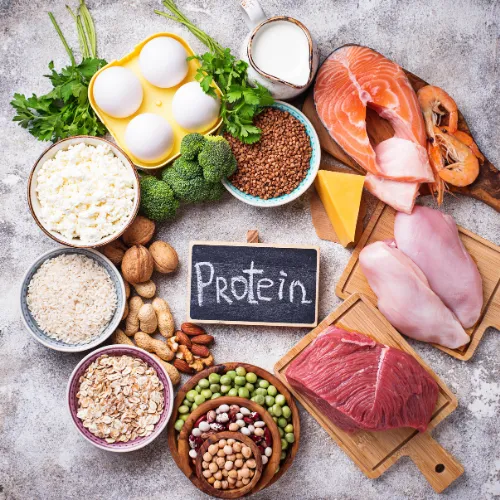
How Protein Intake Fits Into Daily Routines
Protein intake is often discussed as part of broader eating patterns rather than as an isolated nutritional event. Unlike nutrients typically consumed in very small amounts, protein is usually considered across meals, snacks, schedules, and overall daily structure.
Within the broader category of amino acids and protein-based supplements, protein is best understood through consistency and routine over time rather than through occasional intake alone.
Why protein is often discussed across the entire day
Protein differs from many other nutrients because it is usually evaluated in relation to total intake throughout the day rather than through single servings or isolated moments.
This broader view reflects how protein-containing foods are naturally distributed across meals and snacks. Breakfasts, lunches, dinners, beverages, recovery foods, and convenience products may all contribute to overall intake patterns.
As a result, protein is commonly discussed in relation to structure, consistency, and meal organization rather than as a separate nutritional event.
How modern routines influence protein intake
Daily schedules often shape how protein intake is organized in practice. Work routines, commuting, travel, exercise habits, appetite changes, meal timing, and convenience all influence how consistently protein-containing foods are included throughout the day.
For some people, protein intake follows relatively stable meal patterns. For others, intake may fluctuate more depending on scheduling, food availability, or changing routines.
This variability is one reason protein-support products such as powders, bars, shakes, and meal-support beverages have become increasingly common within modern nutrition habits.
How protein is commonly distributed across meals
In everyday eating patterns, protein is often spread across multiple meals and snacks rather than concentrated into one large intake.
For example, protein may appear through:
- Eggs, yogurt, or smoothies at breakfast
- Meat, legumes, grains, or dairy products during lunch and dinner
- Snack foods, shakes, or convenience products between meals
- Protein-support products around physical activity or busy schedules
This broader distribution helps explain why protein is usually discussed as part of the overall dietary structure rather than as an isolated supplement category.
Why convenience plays such a large role
Convenience is one of the biggest reasons protein-support products became integrated into everyday routines. Preparing full meals consistently is not always practical, especially during busy schedules, travel, long workdays, or changing appetite patterns.
Protein powders, ready-to-drink shakes, bars, and portable snacks provide more structured and repeatable ways to include protein when meal timing becomes less predictable.
These products are generally used to support consistency within eating patterns rather than to replace food entirely.
For more on how protein powders fit into everyday nutrition, see Understanding Protein Powders in Everyday Nutrition.
How protein intake relates to food patterns
Protein intake is closely connected to broader dietary patterns because amino acids are naturally obtained through protein-containing foods. Animal products, legumes, grains, dairy products, nuts, seeds, and plant protein foods all contribute to overall intake in different ways.
Because of this, discussions about protein often overlap with meal planning, food preferences, dietary styles, and routine eating habits.
Some eating patterns naturally provide larger amounts of protein, while others may require more intentional meal organization to maintain consistency over time.
How protein intake is discussed alongside physical activity
Protein is frequently associated with exercise, movement, and recovery routines because physical activity often changes how people think about food timing and meal structure.
At the same time, protein intake is not limited to athletic settings. Protein remains part of everyday nutrition, whether someone exercises regularly or not.
This distinction is important because protein is fundamentally a food-related nutritional category rather than a specialized sports-only concept.
How plant-based and animal-based patterns differ
Protein intake patterns may also vary depending on whether a person relies more heavily on plant-based foods, animal-based foods, or a mixture of both.
Animal-based proteins are often discussed as complete protein sources because they naturally contain all essential amino acids in substantial amounts. Plant-based proteins may provide different amino acid distributions depending on the food source and the combination of foods consumed.
For more on how these approaches are commonly compared, see Plant-Based vs Animal-Based Protein Powders.
Why protein intake can feel confusing
Protein discussions can sometimes become confusing because protein appears across many overlapping categories at once. Foods, powders, shakes, bars, meal-support products, amino acid supplements, and recovery-focused products may all be discussed together even when they serve different roles.
In addition, protein conversations are often influenced by fitness culture, wellness marketing, convenience products, and changing dietary trends.
At a foundational level, however, protein intake is still best understood through broader eating patterns and consistency over time.
How amino acids fit into the larger picture
Proteins are built from amino acids, which are the smaller compounds that make up protein structure itself. This relationship is one reason protein intake discussions often overlap with discussions of amino acids.
Rather than functioning separately, amino acids and proteins are closely connected parts of the same nutritional framework.
For more on this relationship, see What Amino Acids Are and How They Are Commonly Understood.
Food, routine, and long-term consistency
Protein intake is most useful to understand through long-term dietary structure rather than isolated meals or short-term routines. Consistency across days and weeks generally matters more than any single meal alone.
This broader perspective helps explain why protein-support products are commonly integrated into routines involving convenience, scheduling, and meal structure rather than being viewed as entirely separate from food.
In practice, protein intake is usually shaped by how daily life is organized, how meals are structured, and how consistently protein-containing foods are included over time.
Bringing it together
Protein intake fits into daily routines through meals, snacks, beverages, convenience products, and broader eating patterns that develop over time. Rather than functioning as an isolated nutritional event, protein is usually discussed in relation to structure, consistency, and meal organization across the day.
Understanding protein intake this way helps place protein powders, amino acids, meal-support products, and whole foods within the same broader nutritional framework.
As part of the amino acids and protein-based supplements category, protein intake is best understood through routine, food patterns, and long-term consistency within everyday life.

 Session Expired from Inactivity