Understanding Vitamin C in Everyday Nutrition
Deep dive
Vitamin C is one of the most familiar nutrients in everyday nutrition. It is closely associated with fruits, vegetables, freshness, and general nutrient intake, which is why many people first encounter it through food before they ever think about it as a supplement.
Within the broader category of vitamins and minerals, vitamin C is best understood as a water-soluble nutrient that depends on regular intake. Rather than being stored in large amounts for long periods, it is used in ongoing daily processes. This makes vitamin C a useful example of how some nutrients are shaped by consistency in ordinary eating patterns.
What vitamin C is
Vitamin C, also known as L-ascorbic acid, is an essential nutrient. The body cannot make it on its own, so it must come from food, fortified foods, or supplements.
It participates in several normal body processes, including collagen formation, tissue maintenance, and antioxidant activity. These roles help explain why vitamin C is often discussed in relation to skin, connective tissue, immune function, and general nutrition. At the same time, it should still be understood as part of overall nutrient intake rather than as a standalone solution.
Why vitamin C is so widely recognized
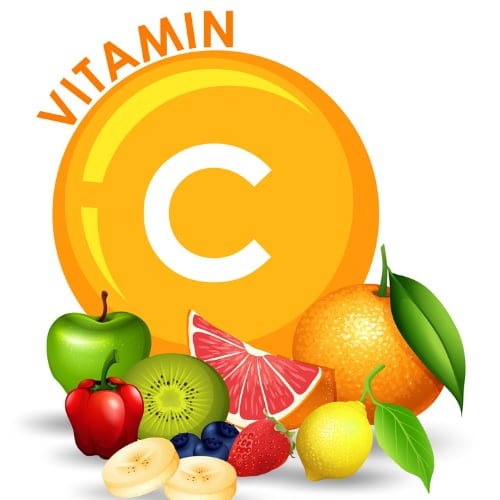
Vitamin C has become one of the best-known nutrients because it is easy to connect with everyday foods. Citrus fruits, berries, peppers, and leafy vegetables are familiar examples, and many people learn to associate these foods with vitamin C from an early age.
It also appears in many common products, including multivitamins, drink mixes, chewables, lozenges, powders, and fortified beverages. This makes vitamin C visible across both food and supplement settings.
Because of this visibility, vitamin C often serves as a starting point for understanding how nutrients can move between diet and supplementation. It is not unusual for someone to think about vitamin C both as something found in food and as something that can be added more deliberately through a supplement routine.
Where vitamin C is commonly found
Vitamin C is naturally present in many fruits and vegetables, especially foods that are eaten fresh or lightly prepared.
- Citrus fruits such as oranges, lemons, limes, and grapefruit
- Berries such as strawberries, raspberries, and blueberries
- Vegetables such as bell peppers, broccoli, Brussels sprouts, and leafy greens
- Fruits such as kiwi, pineapple, mango, papaya, and melon
Food handling matters because vitamin C can be affected by heat, light, air exposure, and storage time. This does not mean every food choice needs to be measured closely, but it does help explain why vitamin C is often discussed in relation to fresh, regularly eaten foods.
How vitamin C fits into daily routines
In everyday life, vitamin C is usually part of a broader eating pattern. Someone who regularly eats fruits and vegetables may encounter it throughout the day without thinking about it directly.
Supplements are often used when intake is inconsistent, when food routines are limited, or when a person prefers a more measurable way to include a specific nutrient. This is one reason vitamin C appears in so many different supplement formats, from simple capsules to powders and chewables.
Because vitamin C is water-soluble, it is commonly associated with repeated intake rather than occasional use. This connects it with the broader idea that regular habits support some nutrients over time.
Water-soluble nutrients and consistency
Vitamin C belongs to the group of water-soluble vitamins. These nutrients dissolve in water and are not stored in the same way as fat-soluble vitamins. As a result, recent intake plays a larger role in how they are understood.
This does not mean vitamin C needs to be treated as complicated. It simply means that the nutrient is usually framed in terms of consistency. Daily food patterns, regular routines, and repeated exposure matter more than occasional large intakes.
For a broader explanation of this distinction, see Water-Soluble vs Fat-Soluble Vitamins.
How vitamin C works with other nutrients
Vitamin C does not operate in isolation. Like many vitamins and minerals, it participates in systems that involve other nutrients. For example, it is commonly discussed alongside iron because vitamin C can influence how non-heme iron from plant foods is absorbed.
This kind of relationship is one reason nutrients are best interpreted within a broader nutritional context. Foods naturally contain combinations of nutrients, and supplements often reflect that same idea in a more concentrated or specific form.
For more on this broader pattern, see How Vitamins and Minerals Work Together.
How intake levels are usually understood
Vitamin C intake is often discussed through general nutrition guidelines, which vary by age, sex, and life stage. These reference amounts can be useful, but most people do not think about vitamin C by tracking exact numbers every day.
In practical terms, intake is usually shaped by ordinary food choices. A pattern that regularly includes fruits and vegetables will usually create a different vitamin C context than a pattern built mostly around highly processed or limited foods.
This is why vitamin C is often better understood as part of a steady nutrition pattern rather than as a nutrient people need to isolate or constantly calculate.
Food, fortified products, and supplements
Vitamin C is a clear example of how one nutrient can appear in several places. It can come from whole foods, fortified foods, beverages, multivitamins, or standalone supplements.
These sources are not all the same in how they fit into daily life. Food provides vitamin C alongside fiber, water, and other nutrients. Fortified products add vitamin C to foods or drinks that may not naturally contain much of it. Supplements provide a more direct and measurable form.
Understanding these differences helps keep the nutrient in context. The point is not that one source automatically replaces another, but that vitamin C can be included in a routine in several different ways.
Where confusion often comes from
Confusion around vitamin C often comes from how familiar it is. Because it is widely recognized, it is sometimes discussed in overly broad or exaggerated ways.
Vitamin C may be presented as a general wellness nutrient, an immune-related nutrient, an antioxidant nutrient, or a skin-related nutrient. These descriptions usually point back to normal roles in the body, but they can make the nutrient sound more specialized than it really is.
Within the vitamins and minerals category, vitamin C is best interpreted as a foundational nutrient connected to everyday intake. It is important, but it still belongs inside the larger pattern of diet, routine, and overall nutrition.
Bringing it together
Vitamin C is familiar because it sits at the intersection of food, supplements, and everyday nutrition. It is naturally present in many fruits and vegetables, commonly added to fortified products, and widely available in supplement form.
Its water-soluble nature makes regular intake an important part of how it is understood. Rather than viewing vitamin C as an occasional input, it is more useful to see it as part of the steady nutritional pattern that supports daily life.
As a member of the vitamins and minerals category, vitamin C helps illustrate how foundational nutrients are interpreted through food, routine, and consistency over time.

 Session Expired from Inactivity