Understanding Magnesium in Everyday Life
Deep dive
Magnesium is one of the most widely discussed minerals in everyday nutrition. It is commonly associated with muscles, nerves, relaxation, and general daily function, making it a familiar ingredient in both food-focused nutrition and supplement routines.
Within the broader category of vitamins and minerals, magnesium is best understood as a foundational mineral involved in many ongoing processes throughout the body. Rather than being tied to a single system or isolated role, it participates across multiple areas of everyday physiological activity.
What magnesium is
Magnesium is an essential mineral that the body requires for normal cellular and metabolic function. It participates in processes involving muscles, nerve signaling, structural maintenance, and energy production.
Because magnesium is involved across so many systems, it is often discussed in broad everyday contexts rather than in connection with only one specific function. This wide involvement is one reason magnesium appears in many different types of supplements and wellness conversations.
Why magnesium is so commonly discussed
Magnesium has become increasingly visible in modern nutrition discussions because many everyday routines can influence intake patterns over time. Food choices, stress levels, activity patterns, and highly processed diets are all commonly mentioned in conversations about magnesium.
At the same time, magnesium is frequently associated with ordinary daily experiences such as muscle tension, physical recovery, evening routines, and general relaxation. This has contributed to its reputation as one of the more recognizable minerals within the supplement category.
Because magnesium participates in many overlapping systems, it is often interpreted as a "broad-support" nutrient rather than one tied to a narrow or isolated purpose.
Where magnesium is commonly found
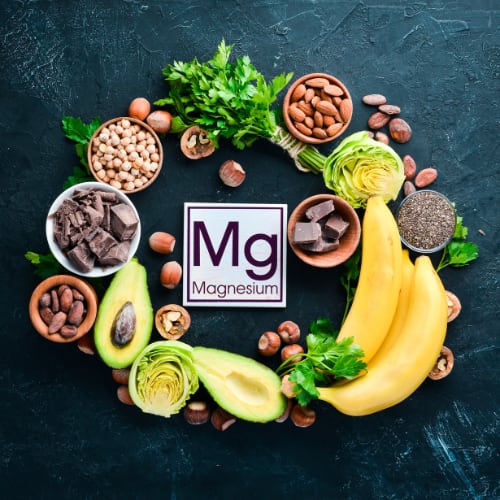
Magnesium is naturally present in a variety of foods, particularly plant foods and minimally processed ingredients.
- Leafy green vegetables such as spinach and Swiss chard
- Nuts and seeds, including almonds, pumpkin seeds, and cashews
- Legumes such as black beans and lentils
- Whole grains and oats
- Foods such as avocado, dark chocolate, and certain mineral waters
Food processing can influence magnesium content, which is one reason intake patterns may vary across different eating styles. Diets centered around heavily refined foods are often discussed differently from those built around more whole or minimally processed foods.
How magnesium fits into everyday routines
Magnesium is often encountered through both food and supplementation. Some people think about magnesium mainly through dietary patterns, while others include it deliberately as part of a routine that includes exercise, recovery, evening habits, or general nutritional support.
Unlike nutrients strongly associated with one specific food source, magnesium is spread across many different foods in varying amounts. This makes the overall dietary pattern more important than any single ingredient alone.
Magnesium supplements are also available in many forms, including capsules, powders, drink mixes, and combination products. In everyday life, these supplements are often used as a more structured or measurable way to include magnesium within a routine.
Why magnesium appears in many different supplement categories
Magnesium is frequently included in products associated with relaxation, recovery, muscle support, sleep routines, and general wellness. This can sometimes make it seem as though magnesium belongs to several separate categories at once.
In practice, this overlap reflects how broadly magnesium participates in normal body processes. Rather than belonging to a single category, magnesium is found across different types of formulations because of its wide-ranging role in everyday physiology.
This makes magnesium a useful example of how foundational nutrients can appear in many different contexts while remaining part of the broader vitamins and minerals category.
How magnesium relates to other nutrients
Like other minerals, magnesium works within a larger nutritional network rather than independently. It is commonly discussed alongside nutrients associated with structural maintenance, hydration, nerve signaling, and muscle function.
This broader context helps explain why nutrients are often interpreted together rather than as isolated inputs. Food naturally contains combinations of vitamins and minerals, and supplement formulations frequently reflect these overlapping relationships.
For more on how nutrients interact across shared systems, see How Vitamins and Minerals Work Together.
Different forms of magnesium
Magnesium supplements are available in several forms, including magnesium citrate, glycinate, oxide, malate, and others. These forms are commonly discussed in relation to absorption, digestion, and the positioning of products within everyday supplement routines.
At a foundational level, these products still represent ways of providing the same essential mineral. The differences usually relate to how magnesium is combined, delivered, or tolerated within different supplement formats.
Understanding these distinctions helps explain why magnesium products can look very different while still belonging to the same general nutrient category.
Where confusion often comes from
Because magnesium appears across many supplement categories, it is often discussed in broad or highly generalized ways. It may be associated with stress, sleep, muscles, recovery, hydration, or relaxation, depending on the product or context.
While these discussions usually point back to normal physiological roles, they can make magnesium seem more specialized or fragmented than it really is.
Within the vitamins and minerals category, magnesium is best understood as a foundational mineral involved in many overlapping systems throughout everyday life.
Bringing it together
Magnesium is one of the most recognizable minerals in modern nutrition because it participates in many ordinary physiological processes and appears in a wide range of foods and supplement routines.
Its broad presence across nutrition, lifestyle, and supplement discussions helps illustrate how foundational nutrients can influence many areas of everyday life without belonging to only one narrow category.
As part of the broader vitamins and minerals category, magnesium provides another example of how nutrition is shaped through consistent patterns of food, routine, and long-term habits.

 Session Expired from Inactivity