Paleo and Ancestral Eating Patterns
Series article
Paleo and ancestral diets are based on ideas about how people ate in the past. In everyday life, these patterns are interpreted differently depending on preferences, routines, and available foods.
Diet Types Explained
An educational series explaining how common eating patterns are labeled, how these labels are used, and how they relate to everyday routines rather than fixed definitions.
Series overview and full index
- Part 1: What Diet Labels Actually Mean
- Part 2: Why Most People Do Not Fit Into One Diet Type
- Part 3: Pattern-Based Diets and Traditional Eating Styles
- Part 4: Research-Based Diets and Structured Eating Patterns
- Part 5: Plant-Based Diets in Everyday Life
- Part 6: Flexible Eating Patterns and Real-World Diets
- Part 7: Low-Carb and Ketogenic Eating Patterns
- Part 8: Paleo and Ancestral Eating Patterns
- Part 9: Restrictive and Elimination Diets
- Part 10: Therapeutic and Condition-Specific Diets
- Part 11: How Eating Patterns Change Over Time
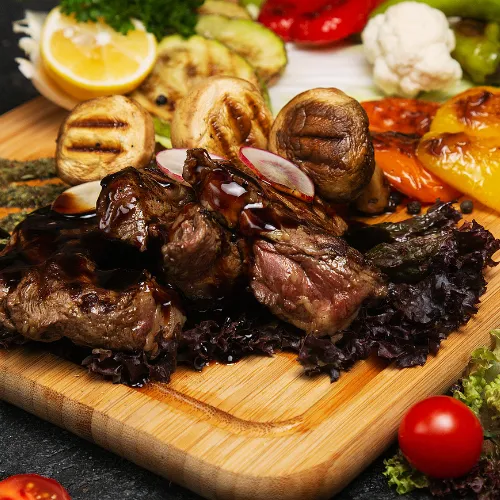
Paleo and ancestral diets are typically framed around selecting foods considered more consistent with earlier human eating patterns. In practical terms, this often means emphasizing foods like meats, fish, vegetables, fruits, nuts, and seeds, while limiting or excluding grains, legumes, dairy, and other processed foods.
How ancestral eating patterns are defined
Ancestral diets are generally defined by food categories rather than strict measurements. The focus is on which types of foods are included or excluded based on how closely they are believed to align with earlier eating patterns.
Unlike structured diets that rely on precise ratios or targets, paleo-style approaches are usually described in broader terms. The emphasis is on building meals from certain categories-such as animal proteins, vegetables, and natural fats-while avoiding others, such as refined sugars or industrially processed foods.
This makes the pattern recognizable, but not tightly standardized.
The role of historical reference points
These diets rely on the idea of looking to the past as a reference point. However, there was no single way people ate historically. Food availability varied by region, climate, and season, which means modern ancestral diets are simplified interpretations rather than exact recreations.
What is considered "ancestral" today is often a modern reconstruction, shaped by current food systems and access rather than historical accuracy.
This introduces flexibility into the concept, even when the label suggests something more fixed.
Variation within the same label
In everyday use, paleo and ancestral labels are applied with different levels of strictness. Some individuals consistently avoid entire categories such as grains, legumes, and dairy. Others follow a looser version, where these foods may appear occasionally depending on context.
Even within similar levels of restriction, meal structure can differ. One approach may center on simple combinations of proteins and vegetables, while another includes more varied or adapted meals using modern ingredients that still fit the general framework.
The shared label does not guarantee a shared routine.
Food choices and modern context
Although these patterns are based on historical ideas, they are carried out in a modern environment. Grocery stores, packaged products, restaurant menus, and time constraints all influence how meals are actually prepared and consumed.
For example, foods labeled as "paleo-friendly" may be designed for convenience, even though convenience itself is a modern factor. This creates a version of the pattern that blends historical concepts with present-day realities.
As a result, the lived version of ancestral eating often reflects both intention and adaptation.
How these patterns fit into daily routines
Daily routines shape how closely ancestral patterns are followed. Meals prepared at home may align more closely with the intended structure, while meals eaten in social or external settings may introduce variation.
Over time, individuals often adjust their approach to better fit their schedule, preferences, and available options. This can lead to a pattern that maintains its general direction while allowing for practical flexibility.
Rather than a fixed system, it becomes a consistent tendency shaped by routine.
How labels and behavior may differ
Some individuals use paleo or ancestral labels to describe a guiding framework, even if their eating patterns include occasional deviations. Others follow similar patterns without using the label at all.
This reflects the broader role of diet labels as shorthand descriptions rather than precise representations of daily behavior.
The label signals a general approach, but the details are defined by how it is lived out.
Bringing it together
Paleo and ancestral diets are based on interpretations of past eating patterns, but their real-world application varies widely. The same label can represent a structured, category-based approach or a more flexible pattern adapted to modern life. Understanding this distinction helps clarify what these diets look like in practice rather than relying solely on the concept.
Within the nutrition lifestyle domain, eating patterns are shaped by routine, environment, and consistency over time. For a more practical look at how nourishment fits into everyday life, see Nourishing for Health.
Key takeaways
Learning objective: Understand how paleo and ancestral diet patterns are defined and how they vary in real-world application.
Behavioral objective: Recognize that ancestral eating patterns are interpretations that adapt to modern routines and conditions.
Key thought: Ancestral diets are based on ideas about the past, but practiced within modern life.

 Session Expired from Inactivity