Low-Carb and Ketogenic Eating Patterns
Series article
Low-carbohydrate and ketogenic diets are defined by reducing carbohydrate intake and emphasizing fats and proteins. In everyday life, these patterns are interpreted and applied with varying levels of structure.
Diet Types Explained
An educational series explaining how common eating patterns are labeled, how these labels are used, and how they relate to everyday routines rather than fixed definitions.
Series overview and full index
- Part 1: What Diet Labels Actually Mean
- Part 2: Why Most People Do Not Fit Into One Diet Type
- Part 3: Pattern-Based Diets and Traditional Eating Styles
- Part 4: Research-Based Diets and Structured Eating Patterns
- Part 5: Plant-Based Diets in Everyday Life
- Part 6: Flexible Eating Patterns and Real-World Diets
- Part 7: Low-Carb and Ketogenic Eating Patterns
- Part 8: Paleo and Ancestral Eating Patterns
- Part 9: Restrictive and Elimination Diets
- Part 10: Therapeutic and Condition-Specific Diets
- Part 11: How Eating Patterns Change Over Time
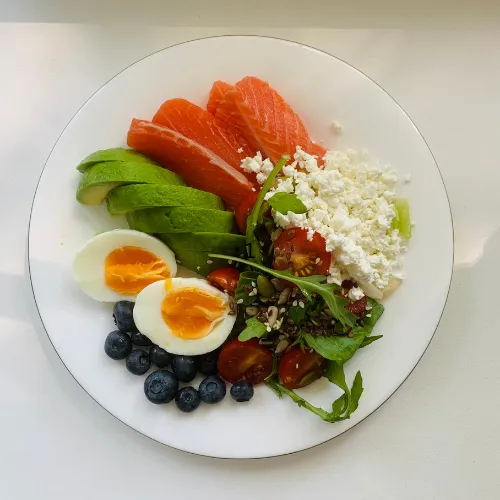
Low-carbohydrate and ketogenic diets are often described in terms of macronutrient balance. Still, most people understand them through more tangible shifts-reducing foods like grains, sugars, and starches while building meals around proteins, fats, and lower-carbohydrate vegetables.
How low-carbohydrate patterns are defined
Low-carbohydrate diets are generally defined by limiting foods commonly associated with higher carbohydrate intake, including grains, sugars, and certain starches. What replaces those foods varies, but meals are typically built around proteins, fats, and non-starchy vegetables.
The term "low-carb" itself is broad. For some, it means avoiding obvious sources of carbohydrates, such as bread or sugary foods, while keeping other elements relatively unchanged. For others, it involves more consistent attention to how meals are composed across the day.
This range is part of what makes the label widely used but loosely defined.
What distinguishes ketogenic patterns
Ketogenic patterns are commonly understood as a more narrowly defined version of low-carbohydrate eating. They emphasize a more pronounced reduction in carbohydrates and a greater reliance on fats, creating a more structured approach to meal construction.
In everyday use, however, the term "keto" is often applied more broadly than its original definition. Some individuals follow a highly structured version of the pattern, while others use the label to describe a general shift away from carbohydrate-heavy meals.
This creates a gap between the defined structure of ketogenic patterns and how the label is used in conversation.
How these patterns are commonly described
Low-carbohydrate and ketogenic diets are frequently described in terms of restriction-what is reduced or avoided-rather than how meals are consistently structured. This leads to simplified descriptions such as "cutting carbs" without clarifying what replaces them.
In practice, the structure of meals matters as much as what is limited. A pattern built around proteins, fats, and vegetables can look very different depending on how those elements are combined, even if the same foods are excluded.
The label points in a direction, but it does not fully describe the pattern.
Variation in how these patterns are applied
There is wide variation in how low-carbohydrate and ketogenic patterns are applied. Some individuals follow a clearly structured approach with consistent meal composition, while others adopt a more flexible version that adjusts based on context.
For example, someone may follow a more structured pattern at home, where meals can be planned, and a looser version in social or travel settings. Another person may maintain a general reduction in carbohydrate-rich foods without adhering to any specific structure.
Both may use the same label, even though their day-to-day patterns differ significantly.
Food choices within the same label
Even within the same general pattern, food choices can vary widely. Some individuals build meals around simple combinations of proteins, fats, and vegetables. In contrast, others include a broader range of packaged or convenience foods that still align with the same general approach.
This highlights an important distinction: the label defines a direction, but not the quality, sourcing, or preparation of foods within that pattern.
How these patterns fit into daily routines
Daily routines shape how consistently these patterns are followed. Time constraints, work schedules, and food availability all influence how meals are assembled.
Over time, many people adjust their level of restriction to better fit their routine. What begins as a more structured approach may become more flexible, or vice versa, depending on how sustainable the pattern feels within everyday life.
This ongoing adjustment is part of how these patterns are maintained outside of controlled settings.
How labels and behavior may differ
As with other diet types, there is often a gap between how low-carbohydrate or ketogenic diets are described and how they are practiced. Some individuals strongly identify with the label, even when their eating patterns vary across situations. Others follow similar patterns without using a specific term.
This reinforces the idea that the label is a simplified way of describing a broader set of behaviors rather than a precise definition of how someone eats.
Bringing it together
Low-carbohydrate and ketogenic diets are defined by reducing carbohydrate intake and shifting how meals are built, but their real-world application varies widely. The same label can represent a structured, consistent pattern or a more flexible approach shaped by routine and environment. Understanding this range helps clarify what these terms mean in practice rather than relying solely on definitions.
Within the nutrition lifestyle domain, eating patterns are shaped by routine, environment, and consistency rather than strict definitions. For a more practical look at how nourishment fits into everyday life, see Nourishing for Health.
Key takeaways
Learning objective: Understand how low-carbohydrate and ketogenic diet patterns are defined and how they vary in real-world application.
Behavioral objective: Recognize that low-carb and ketogenic eating patterns can be applied with varying levels of structure and consistency.
Key thought: Low-carb and ketogenic diets are defined by macronutrient emphasis, but practiced with variation.

 Session Expired from Inactivity