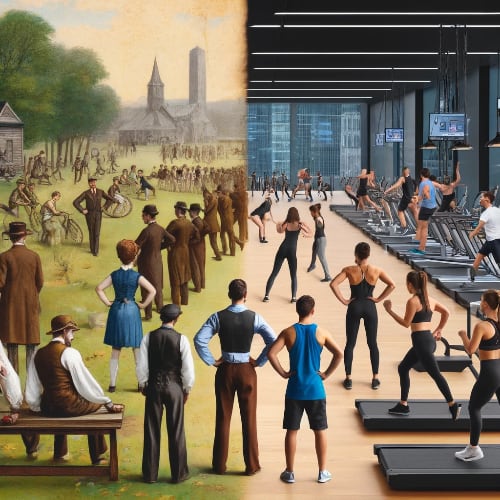
A Century of Movement
Series article
Over the past hundred years, movement has shifted from an unavoidable part of daily life to something that often requires deliberate effort. Changes in work, transportation, household tasks, and the design of everyday environments gradually reduced the physical activity that had once been built into normal routines. As a result, movement is now often treated as a separate activity rather than a continuous part of daily living.
A Century of Change
How food, movement, and stress patterns transformed over the last hundred years, shaping modern health context.
Series overview and full index
- Part 1: A Century of Eating
- Part 2: A Century of Movement
- Part 3: A Century of Stress
This article is part of a broader look at how long-term changes in daily life continue to influence outcomes such as metabolic health, which develops gradually through how the body uses and manages energy over time.
Early 20th century: movement built into daily life
In the early 1900s, movement was inseparable from everyday living. Many jobs required sustained physical effort, while household tasks such as cooking, cleaning, and laundry added consistent activity throughout the day. Walking was a primary form of transportation, and daily life naturally required physical engagement.
Strength, mobility, and endurance developed as a byproduct of routine rather than something people set out to train.
Mid-20th century: mechanization changes daily activity
As mechanization expanded, the physical demands of both work and home life began to decline. Machines replaced manual labor in many settings, and household appliances reduced the effort required for daily tasks.
Movement became less continuous, and the idea of exercise as a separate activity began to take shape through sports, recreation, and organized fitness.
Late 20th century: sedentary patterns take hold
In the latter half of the century, these shifts accelerated. Increased reliance on cars reduced walking, while television, computers, and office-based work introduced long periods of sitting. Daily life required less movement, even as time demands increased.
Movement became something people needed to "fit in" rather than something that happened naturally throughout the day.
Modern environments and movement separation
Today, many environments are designed for efficiency and convenience. Work, transportation, and entertainment often involve prolonged sitting, while opportunities for natural movement are limited by design. Even people who value physical activity must often plan it intentionally.
This reflects a structural shift in how daily life is organized, not simply a change in individual choices.
Movement within broader daily patterns
As movement became less built into daily life, its connection to other routines became more noticeable. Activity levels now interact more directly with eating patterns, sleep consistency, and stress exposure, shaping how daily life feels and functions over time.
This shift highlights movement as one part of a broader pattern rather than an isolated behavior.
What a century of movement change reveals
The past century shows how quickly daily life can change, while the body continues to respond to movement in the same basic ways it always has. When movement is naturally built into routines, it requires little effort to maintain. When it is removed, it must be reintroduced intentionally.
Understanding this shift helps explain why consistent movement now feels harder to maintain and places it in the context of modern living conditions rather than individual discipline.
For a practical look at how movement fits into everyday life today, see Moving Your Body, which explores sustainable activity patterns that support strength, circulation, energy use, and emotional steadiness without relying on rigid routines or performance goals.

 Session Expired from Inactivity