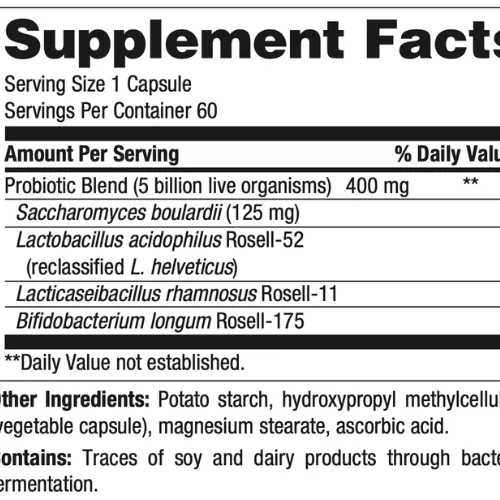
How to Read a Probiotic Label: Strains, CFUs, and Blends
Probiotic labels can look more complicated than they need to be. Long strain names, large numbers, and multi-strain blends often give the impression that more detail means better quality. In practice, these labels are simply describing what is included in the product and how it is measured. Understanding how to read this information helps place probiotic supplements within everyday routines without relying on assumptions or marketing language.
Why probiotic labels look complex
Unlike vitamins or minerals, probiotics are living microorganisms. As a result, they are identified more precisely. Labels often include the genus and species, and sometimes a specific strain designation.
This level of detail reflects how these organisms are categorized rather than indicating that one product is inherently better than another. Numbers on probiotic labels can also appear unusually large because they represent counts of microorganisms rather than nutrient amounts.
Understanding strain names
Probiotic organisms are typically listed using a three-part naming structure: genus, species, and strain. For example, a label may include a name such as Lactobacillus rhamnosus GG.
The genus and species describe the broader classification of the organism, while the strain provides a more specific identifier. Not all products include the full strain designation, and this can vary depending on how the product is formulated and labeled.
Seeing multiple names on a label does not necessarily mean the product is more complex. It simply indicates that more than one type of microorganism is included. A closer look at how these organisms are grouped can help make these names easier to recognize in context.
For a clearer explanation of how common probiotic groups are organized, see common probiotic strains and how they are used.
What CFUs represent
CFU stands for colony-forming units. This number reflects the number of viable microorganisms present. Because probiotics are living organisms, CFUs are used instead of traditional weight-based measurements.
These values are often shown in the billions. While this can make products seem very different from one another, CFU counts are best understood as a way to quantify organisms rather than as a direct measure of effectiveness.
Some labels specify CFUs at the time of manufacture, while others reference the amount expected through the end of shelf life. This distinction can change how the number is interpreted, even when the total appears similar.
Single-strain and multi-strain formulations
Probiotic products may contain a single strain or a combination of strains. Single-strain products focus on one type of organism, while multi-strain formulations include several.
Multi-strain products are often described as blends. These blends can combine different genera or multiple strains within the same species.
The presence of more strains does not automatically indicate a broader or stronger effect. It reflects a different formulation approach.
How blends are typically presented
Some probiotic labels list each strain individually with its corresponding CFU count. Others present a total CFU amount for the entire blend without breaking it down by strain.
When strains are grouped, the label emphasizes the overall composition rather than the contribution of each organism. This can make products easier to read, but provides less detail about how the total is distributed.
Both approaches are common. The difference reflects how the product is organized rather than a strict difference in quality.
Putting probiotic labels into context
Probiotic supplements are one way people incorporate microorganisms into their daily routines, but they are not the only way. Foods such as yogurt, kefir, and other fermented products also contain live organisms, often without detailed labeling.
Understanding how to read supplement labels helps place these products alongside food-based sources rather than viewing them as separate or isolated solutions.
In everyday use, probiotic labels are best seen as a way to describe what is included in a product. Learning how to interpret strain names, CFUs, and blends provides a clearer picture of how these supplements are positioned without relying on assumptions about what the numbers or names imply.
Related education
Probiotic labels are one example of how supplements are organized and described by category. This series explains how different types of supplements are grouped and how those categories shape how they are presented.
How Different Types of Supplements Are Used in Everyday Health

 Session Expired from Inactivity